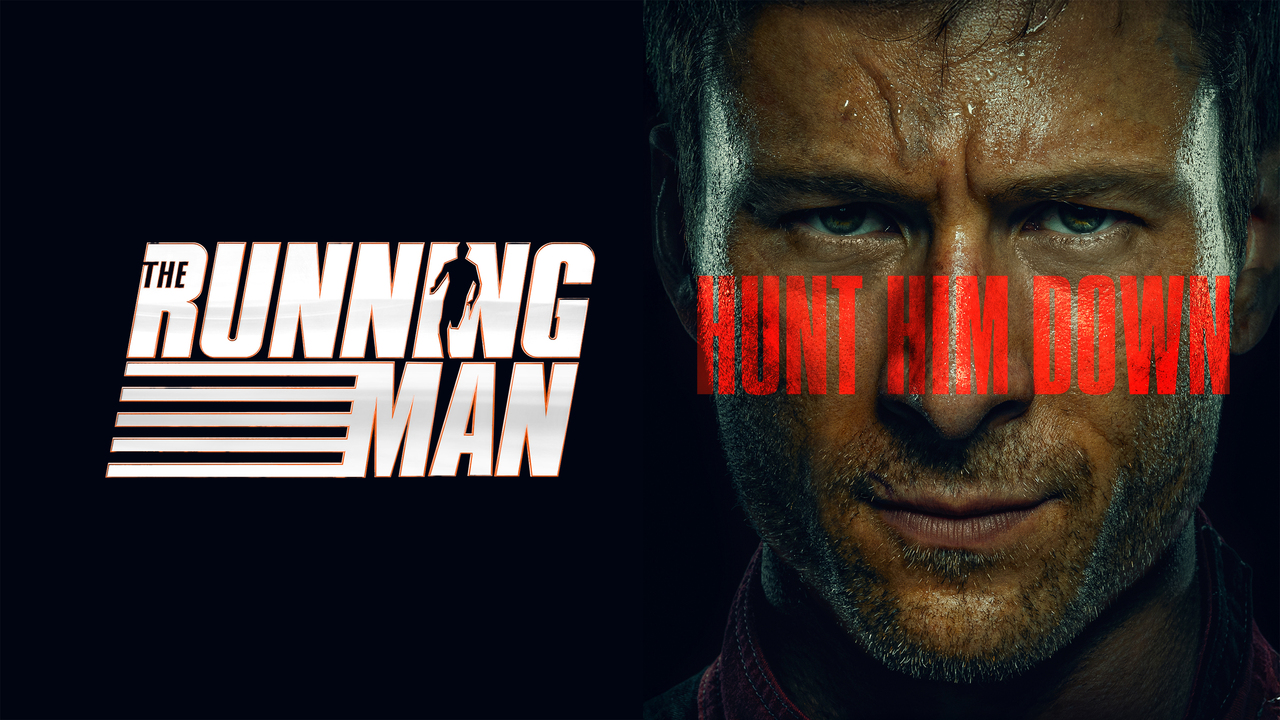
Edgar
Wright is one of those directors whose style is so unmistakable that
you can almost tell who is behind the camera by watching a single scene.
From Shaun of the Dead to Hot Fuzz to Baby Driver, his films have
consistently balanced kinetic energy, precise editing, and sharp humor.
That is why walking into his latest project, The Running Man, I was both
excited and cautious. Unfortunately, this adaptation of Stephen King’s
1982 novel under his pseudonym Richard Bachman is a wild mix of fun and
frustration, and it feels like Wright is holding back when he should be
letting loose.
The film starts strong, with a playful, almost
cartoonish energy that reminds you why Wright became a favorite among
genre enthusiasts. The first hour is full of vibrant set pieces, clever
visual gags, and Glen Powell fully embracing the archetype of the
desperate, determined action hero. Powell is magnetic in the lead role
of Ben Richards, a father trying to secure medicine for his sick
daughter. His performance is both charming and angry, giving us a
protagonist who is aware of the absurdity of his situation yet committed
to seeing it through. Powell’s physicality and charisma make him
captivating to watch, and he handles the film’s early tonal swings with
ease.
The supporting cast is solid and often steals scenes from the
lead. Colman Domingo as Bobby T, the flamboyant host of The Running Man,
is an absolute delight. Every moment he is on screen feels alive and
unrestrained, providing a counterbalance to the film’s darker elements.
Josh Brolin’s Dan Killian, the show’s villainous producer, is effective,
though he never quite reaches the menacing heights the story seems to
promise. Michael Cera makes a fun and brief appearance, bringing a sense
of levity to the otherwise tense proceedings. Katy O’Brian is
criminally underutilized, but she injects vitality into every moment she
is allowed on screen. The chemistry among the ensemble cast is one of
the film’s strongest assets.
The action sequences are slick and
polished, but surprisingly restrained for a film that promises
high-octane mayhem. Wright’s signature kinetic style is present at
moments, yet it never fully reaches the chaotic, thrilling heights of
Baby Driver or Hot Fuzz. The set pieces are enjoyable, and there are
flashes of brilliance, particularly in sequences that focus on suspense
and tension rather than pure spectacle. It is clear that a lot of care
went into staging and shooting these scenes, but the editing sometimes
feels cautious, robbing the sequences of the adrenaline they deserve.
One
of the biggest challenges the film faces is its tone. It attempts to
blend satirical comedy, social commentary, and action thriller elements,
but these strands do not always coexist smoothly. At times, the humor
falls flat, and the satire is overly blunt, making the film feel uneven.
Scenes that should feel shocking or tense are undercut by a sense of
restraint, and the social commentary rarely lands with the weight it
should. The critique of reality television, media manipulation, and
societal complacency is evident but surface-level. The film wants to say
something about our world in 2025, a world eerily close to our own, but
it often substitutes style for substance.
The narrative moves
quickly, sometimes too quickly. Important character moments from the
novel are condensed or omitted, leaving some relationships
underdeveloped and emotional beats feeling hollow. The love Richards has
for his daughter is never in question, but the story spends so little
time establishing stakes outside of the show itself that some of the
tension feels artificial. Similarly, the hunters pursuing Richards,
while visually distinct and sometimes memorable, lack real menace. The
audience understands the threat, but the danger never fully lands. This
contributes to a sense that the film is moving at breakneck speed
without giving viewers the chance to catch their breath and invest
emotionally.
Visually, the film is polished and futuristic, capturing
a United States obsessed with entertainment in a way that is both
immersive and familiar. The production design is vibrant, and the world
feels lived-in, even if it never quite reaches the immersive depth of
classic dystopian cinema. Chung-hoon Chung’s cinematography is competent
and occasionally striking, though it lacks the distinctive flair of his
previous collaborations. The musical choices are excellent, energizing
the action sequences and complementing Wright’s visual rhythm, providing
some of the film’s most enjoyable moments.
Despite all the issues,
The Running Man has its charms. Wright’s moments of directorial flair
shine when the story focuses on suspense or creative action rather than
trying to juggle multiple themes. Glen Powell’s performance keeps the
film engaging, and the supporting cast frequently lifts scenes beyond
what the script delivers. There is a sense of fun buried in the chaos, a
reminder of what Wright does best when he is unshackled by studio
expectations or source material fidelity.
Ultimately, the film feels
like a missed opportunity. It could have been a thrilling, gonzo
adaptation in the vein of the original 1987 version or a pure, chaotic
Wright creation that amplified the absurdity and social critique of the
novel. Instead, it is a cautious, middle-of-the-road blockbuster that
struggles to find its identity. The story is serviceable, the characters
are appealing, and the world is intriguing, but the result is a film
that is entertaining but rarely exhilarating. It is competent, slick,
and at times surprisingly funny, but it is not the bold, audacious, and
unforgettable Wright film that fans hoped for.
For long-time Wright
admirers like me, there is a bittersweet quality to the film. The
kinetic camera moves, playful visual cues, and moments of sharp comedy
remind you of why his earlier work left such a mark, but the restraint
is frustrating. The film flirts with brilliance without ever fully
committing, leaving the viewer with the sense of what could have been.
Glen Powell proves he can carry a lead role with charisma and anger, but
the surrounding elements do not support him in reaching the emotional
and thematic heights the story demands. This is a cautionary example of
how even a director with a distinct voice can be muted by the
constraints of studio filmmaking.
In conclusion, The Running Man is a
film that entertains more than it inspires. It is fast-paced,
occasionally funny, and full of committed performances, yet it struggles
under the weight of its ambition. Edgar Wright’s fingerprints are
present, but faint, and the film lacks the energy and innovation that
have defined his career. Glen Powell shines in the lead, and Colman
Domingo steals every scene he is in, yet the film as a whole never fully
ignites. Fans of the book or casual audiences seeking a polished action
film will find something to enjoy, but for those expecting a Wright
experience, this is likely to feel like a pale shadow of what could have
been. It is an intriguing attempt, but ultimately it is a cautious,
uneven film that reminds us how much we have missed the chaotic,
fearless Edgar Wright of a decade ago.
Comments